Gisela Washington · 26 September 2026
Rebuilding Audience Connections Through Phased Infrastructure Updates in Specialized Web Communities
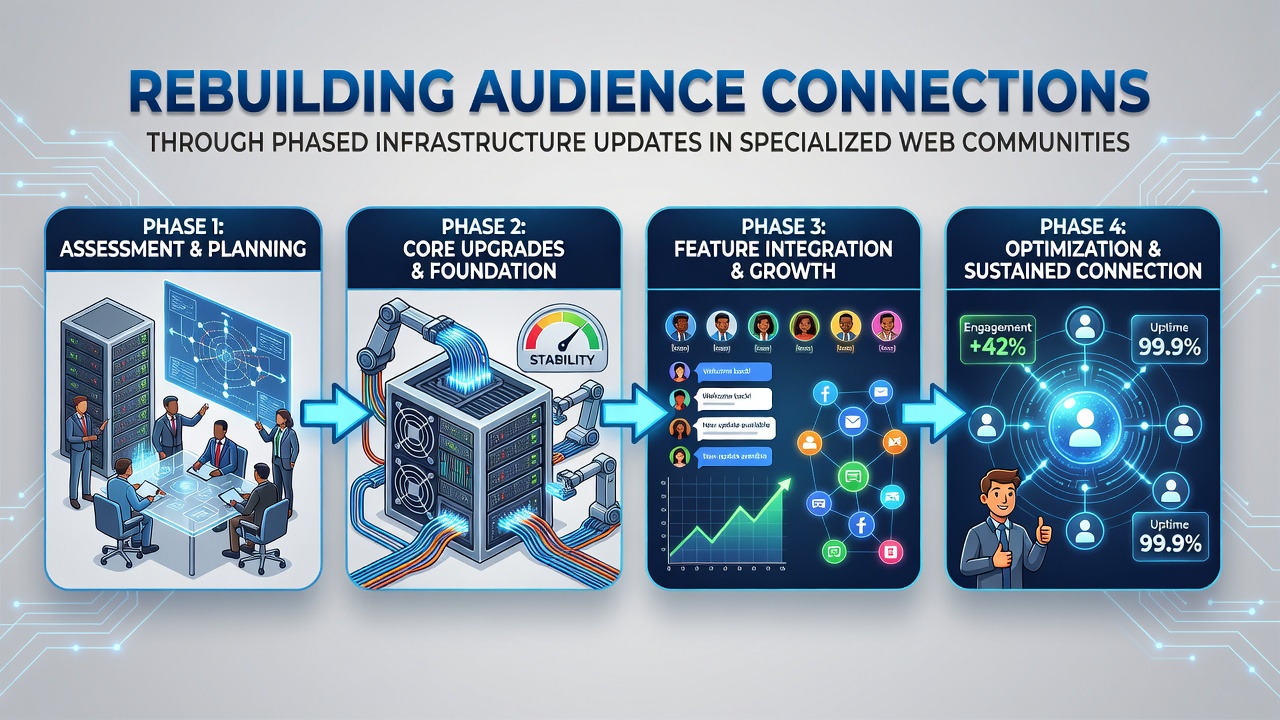
Specialized web communities such as niche forums, hobbyist networks, and topic-specific discussion sites face ongoing pressure to modernize their technical foundations while preserving user trust and participation levels. Phased infrastructure updates provide a structured approach that allows these platforms to introduce changes incrementally rather than through abrupt overhauls. Data from industry monitoring services indicate that gradual migrations reduce service interruptions by up to 60 percent compared with full-scale deployments completed in single events.
Understanding Phased Infrastructure Strategies
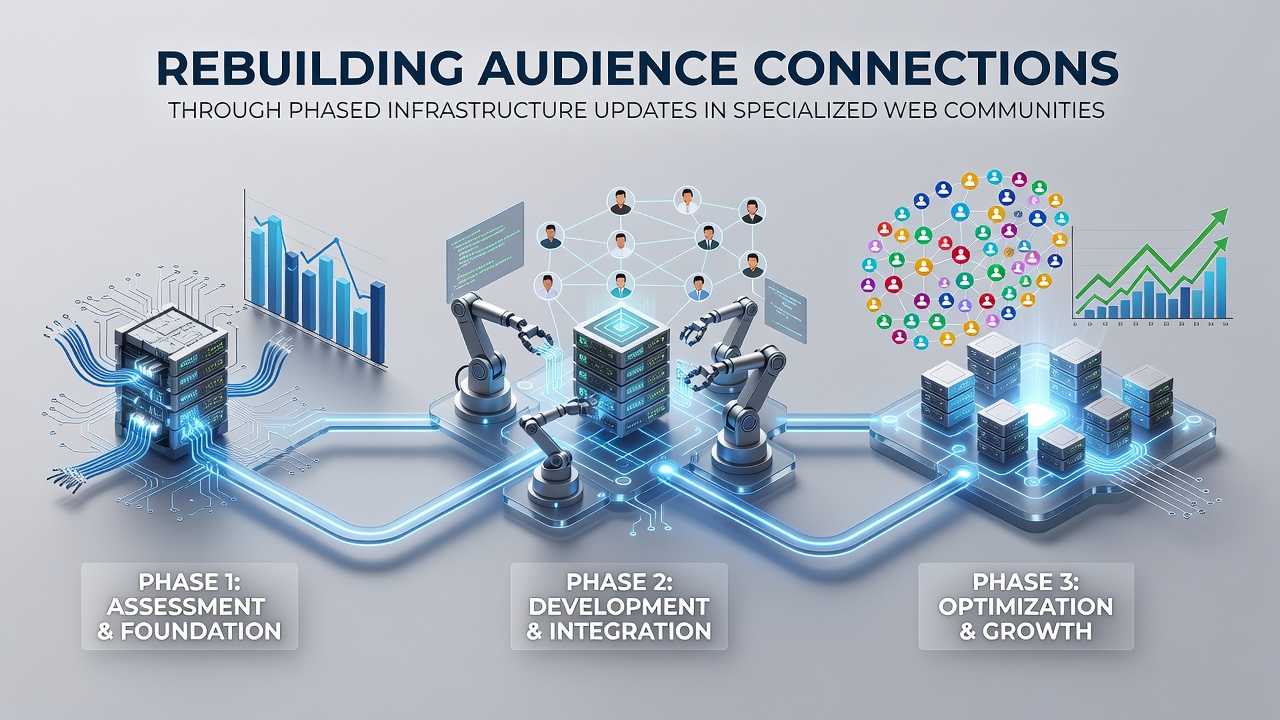
Platform operators break large-scale technical improvements into sequential stages that address core components one at a time. Each stage typically includes server capacity expansions, database optimizations, API refinements, and security protocol enhancements. Observers note that this method allows teams to monitor performance metrics after every segment and adjust subsequent steps based on real-time feedback. Research from academic institutions tracking digital community health shows that communities employing staged rollouts maintain higher retention rates during transition periods than those attempting simultaneous upgrades across all systems.
Minimizing Disruption to User Engagement
Users in specialized communities often develop strong attachments to consistent navigation patterns and response times. Sudden infrastructure changes can trigger temporary drops in activity as members encounter unfamiliar interfaces or slower load speeds. Phased approaches counter this effect by introducing new features behind feature flags that administrators can enable for limited user segments first. Statistics compiled by regional digital economy reports reveal that platforms using controlled exposure phases see average session durations stabilize within two weeks of each update cycle. In September 2026 several European community networks documented sustained daily active user figures after completing their third infrastructure phase, attributing the outcome to prior testing rounds that incorporated member suggestions.
Case Examples from Different Regions
One North American photography enthusiasts network completed a multi-month migration of its media storage architecture by first upgrading its content delivery network nodes in major metropolitan areas before touching regional servers. The process allowed moderators to verify image upload reliability at each location and address bottlenecks without affecting the entire user base simultaneously. A similar pattern appeared in Australian gaming discussion hubs that staggered their database sharding implementation across quarterly intervals. According to figures released by the Australian Bureau of Statistics on digital platform performance, these staggered timelines correlated with fewer reported account deletions during the migration window.
Integrating User Feedback Loops
Effective phased programs embed feedback collection mechanisms at the conclusion of every stage. Administrators solicit input through targeted surveys, usage analytics reviews, and direct moderator reports rather than waiting until the entire project concludes. This continuous input channel helps identify friction points early and informs refinements before wider deployment. Studies conducted by university research groups focusing on online social dynamics demonstrate that communities which publish transparent post-stage summaries experience increased member participation in subsequent feedback rounds. The pattern holds across multiple geographic regions and community types.
Technical Components Commonly Addressed in Phases
- Server hardware and cloud resource scaling
- Database query optimization and indexing improvements
- Authentication and permission system upgrades
- Content caching and delivery network adjustments
- Monitoring and alerting tool integrations
Each element receives dedicated attention during its assigned phase, allowing specialized teams to concentrate expertise without splitting focus across competing priorities. Reports from technology standards organizations indicate that this focused allocation reduces implementation errors by measurable margins when compared with concurrent multi-system updates.
Measuring Connection Recovery
Platform teams track reconnection through a combination of quantitative indicators and qualitative signals. Return visit frequency, average time spent per session, and thread creation rates serve as primary metrics. Qualitative assessments come from sentiment analysis of public discussion threads and private moderator notes. Data compiled across multiple specialized platforms shows that communities completing at least four distinct infrastructure phases within an 18-month period regain pre-update engagement baselines faster than those pursuing fewer but larger changes. External references such as reports from the Pew Research Center on digital community behaviors and analyses published by the OECD on digital platform trends provide comparative benchmarks used by many operators.
Conclusion
Phased infrastructure updates represent a documented method for specialized web communities seeking to modernize technical systems while sustaining audience participation. Evidence gathered from multiple regions and community categories shows measurable advantages in retention and feedback incorporation when changes occur through sequenced stages rather than single comprehensive events. As platforms continue to evolve their backend environments, the practice of breaking updates into manageable segments offers a repeatable framework supported by performance data and user behavior observations.